To the content To main menu

Properly and sustainably deep cleaning of problem areas in the classroom

Dirty desks and blackboards are some of the problems encountered during classroom cleaning. We present solutions that combine students’ and teachers’ expectations regarding health, climate protection, and the environment with a clean and hygienic learning environment.

Furniture and Surfaces

School furniture plays a fundamental role in the comfort of students and teachers, their concentration, and even their academic success. Deep cleaning is equally necessary for hygiene and value retention:

Stubborn stains such as chewing gum are removed using a plastic scraper. A solvent-based plastic cleaner in combination with a blue microfibre cloth, e.g. Tanex power, is recommended for removing biros and fountain pen stains, marker traces and stubborn stains. The label-free power and plastic cleaner from Green Care Professional is ideal for gentle cleaning of all matt, high-gloss and textured plastic and plastic-coated surfaces as well as Plexiglas®. The ready-to-use spray bottle makes it quick and easy to use

Sustainable deep cleaning for a clean learning environment with Green Care Professional © Tana-Chemie GmbH

Clean blackboards

No classroom should be without a blackboard. Whether chalkboards or whiteboards, they are wiped clean after each use. However, deep cleaning is also recommended to maintain the value of the boards in the long term.

Chalkboards consist of board coated with a special varnish. Stubborn residues or mineral stains such as limescale or chalk (so-called champagne chalk) can be removed with a slightly acidic cleaner – the compatibility of the chalkboard is tested with the cleaner beforehand. Then wash the chalkboard with clear water and wipe off. The cheaper gypsum chalk can only be removed mechanically or rinsed off with water.
Whiteboards are available in various designs made from different materials. To extend the life of a whiteboard, choosing the right cleaner is crucial.

  • Melamine resin surfaces are scratch-resistant and pressure-resistant to a certain degree. This non-magnetic surface is suitable for labelling with alcohol-based dry-wipe markers.
  • Painted steel surfaces have a special coating that can be written on with alcohol-based dry-wipe markers. As the special coating can have different properties, it is advisable to test the material compatibility.
  • Whiteboard surfaces made of enameled steel offer long-term, intensive use. The surface is scratch-resistant, so ink from accidentally used markers (e.g. permanent markers) can be removed without damaging the surface. Ink can be easily wiped off, even after long periods of use.
  • Glass surfaces are resistant and can be treated like enameled surfaces.

Tanex power from Green Care Professional is suitable for thorough yet gentle cleaning of most of the chalkboard surfaces mentioned. Painted surfaces must always be tested for material compatibility.

Radiators

The dust that accumulates on the radiator over the winter is dispersed into the room air with the heat, which has a negative effect on heating performance, heating costs and above all the health of pupils. Radiators should therefore be damp-cleaned with a slightly alkaline all-purpose cleaner, e.g. Tanex allround. Any wooden skirting boards underneath should be cleaned with a surfactant-free cleaning agent such as Tanet karacho. Surfactant-free cleaners are particularly compatible with many materials and do not reduce the surface tension of the water as much. A cleaner with surfactants would favors the penetration of moisture if it came into excessive contact with the wood, causing the surface to swell.

The classroom is now ready for lessons. The clean and fresh rooms create a pleasant teaching and learning atmosphere. The use of recyclable cleaning agents contributes to the responsible use of resources. Green Care Professional is Ecolabel and Cradle to Cradle certified, packaging made from 100% recycled PET and 100% recyclable, label-free formulas from a non-fossil base are the foundations for a sustainable future.
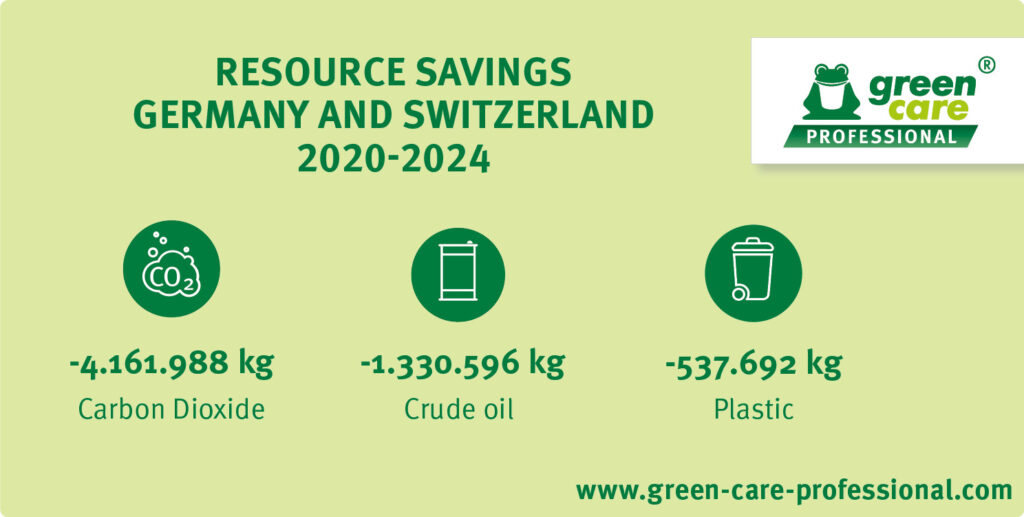
Resource savings: A positive balance for Green Care Professional

In 2024, Green Care Professional once again demonstrated that a consistently implemented circular economy has a positive impact on the environment. By using sustainable cleaning solutions and recycled plastic packaging, 316 tons of crude oil, 128 tons of plastic and 994 tons of CO2 were saved.

Following the principle of “safe for people and the environment,” Green Care Professional has been continuously optimizing its products for more than 30 years. Valuable raw materials are conserved, for example, through:

  • The use of renewable, plant-based raw materials in place of fossil-based raw materials.
  • The use of post-consumer recyclate, e.g. from the household waste collection.
  • The use of renewable energies and sustainable production according to ISO 14001 / 50001 at our EMAS-certified European locations with their own water treatment.
  • The combination of maximum cleaning performance and sustainability. As part of Ecolabel certification, performance is verified by market tests or performance tests by external testing institutes. Our intelligent dosing systems support the efficient use of our cleaning products.

The savings of the last 5 years have made an enormous contribution to resource conservation. ©Tana-Chemie

Green Care Professional customers can calculate their own contribution using the Green Care Professional and prove their success with a certificate.

In 2025, the Mainz-based company and its partners aim to continue saving valuable resources and making an important contribution to a more sustainable, cleaner planet. Further product optimizations are in the works and will be presented this year at the CMS trade fair in Berlin.

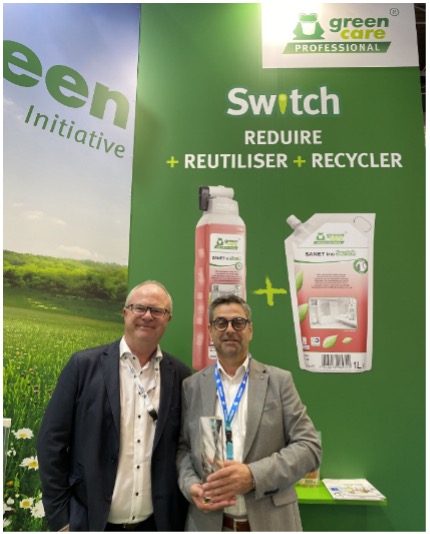
Switch wins Europropre Innovation Award 2025

From March 25 to 27, 2025, the trade fair Europropre took place in Paris Porte de Versailles. With 195 exhibition stands and over 14,000 visitors, Europropre is the most important trade fair for hygiene, cleanliness and multiservices in France and is one of the most important industry events in Europe.

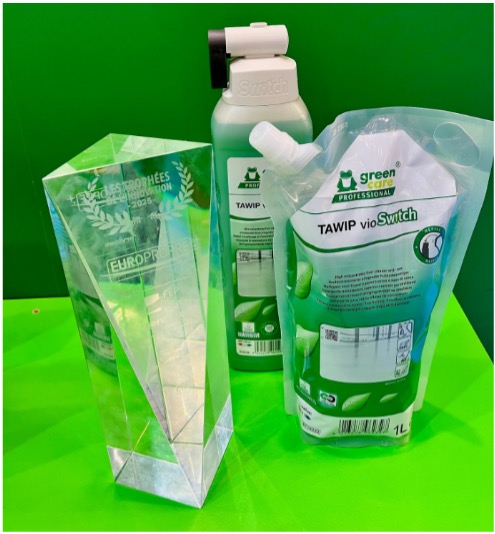
As part of this year’s edition of the trade fair, the “Trophée de l’innovation” (innovation trophies) were awarded on March 24. The competition is held under the auspices of the FEP and is organized in partnership with the magazine “Services”. Three innovative solutions were awarded in the three categories “electrical equipment”, “non-electrical equipment and consumables” and “product”. More than thirty applications were reviewed by the 14-member jury of experts, which initially selected nine nominees.

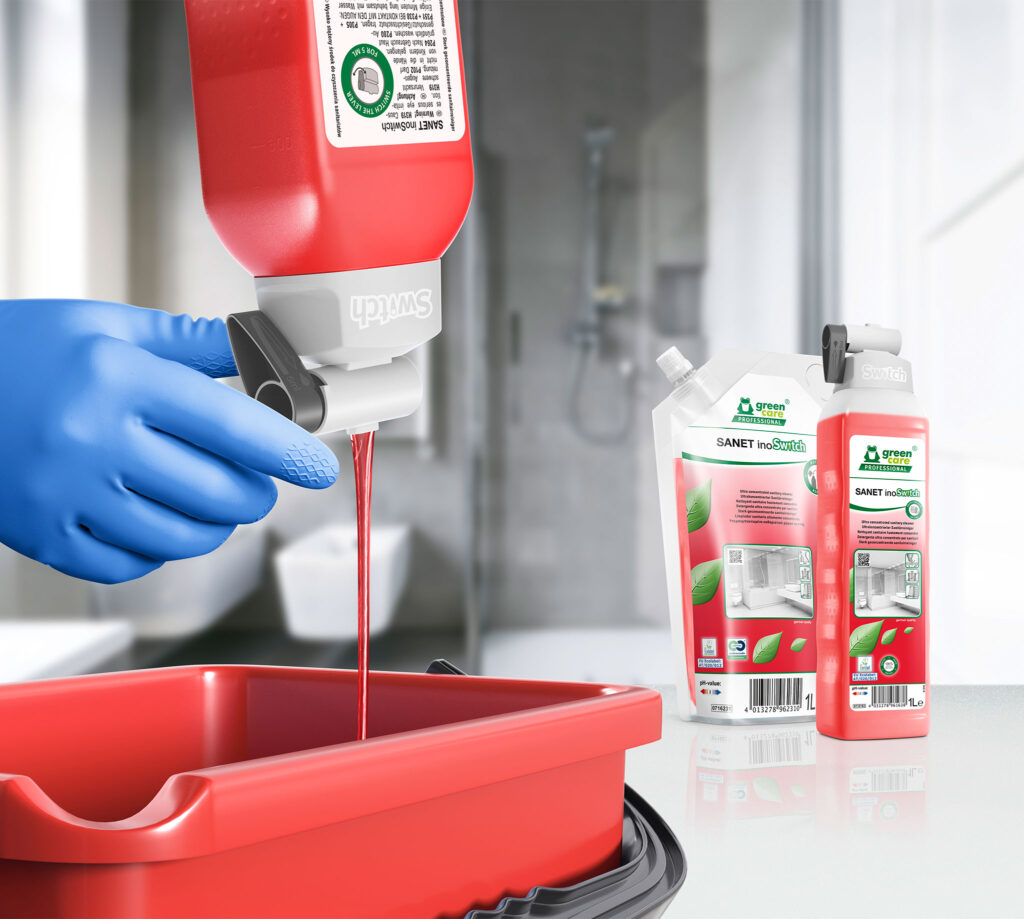
One of the proud winners this year in the “Product” category is Werner & Mertz Professional with the innovative Switch System. In addition to the ultra-concentrated formula, the jury was particularly convinced by the certified ecology of the packaging and the precise dosing made possible by the innovative dosing cap. Switch is the first system on the market to combine efficient, precise dosing without additional equipment with the benefits of sustainable, economical refilling.

The next issue of the “Services” magazine in May/June 2025 will be specifically focused on the innovation trophies and will cover all the innovations presented by the exhibitors at the Europropre trade fair.

The Europropre Innovation Award demonstrates once again that Switch is convincing all along the line – for the entire industry, not just for the niche.

You’ll find more information about the innovative Switch System here:
wmprof.com/systems/switch

© Tana-Chemie GmbH

More convenience in the laundry: ACTIV liquid in new practical packaging

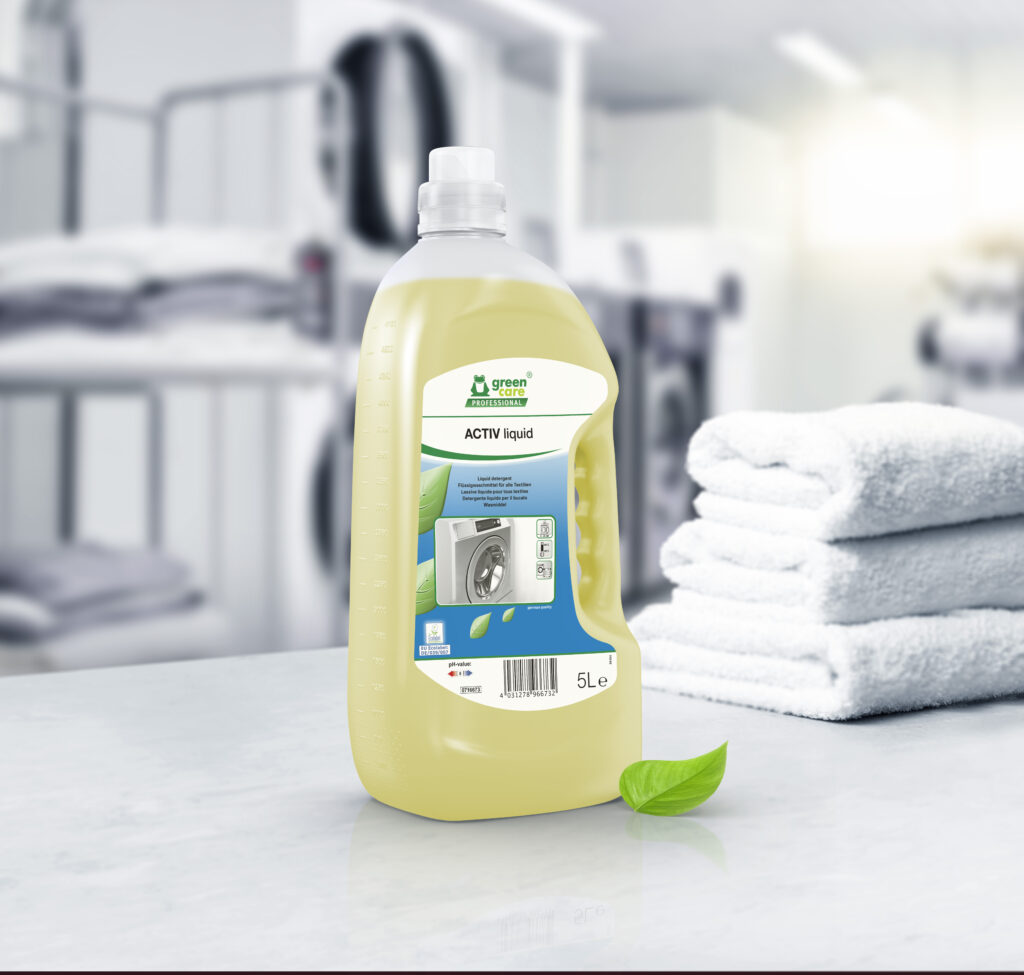
Manual dosing of liquid detergent from a 5 litre canister can be inconvenient. From now on, using ACTIV liquid from Green Care Professional will be easier. The tried-and-tested, concentrated liquid heavy-duty detergent with the EU-Ecolabel has been given new packaging: the handy 5 litre bottle with carrying handle and dosing cap replaces the 5 litre canister.
 

More washing convenience just like at home: ACTIV liquid in the 5 l bottle with handle. © Tana-Chemie GmbH

The user enjoys greater washing convenience with these benefits:

  • The new bottle offers more safety and control when dosing thanks to the scaling on the side of the bottle.
  • The ergonomic handle is equipped with anti-slip studs for safe handling of the container.
  • The dosing cap makes dosing more convenient and accurate.

ACTIV liquid is the ideal solution for efficient washing of white and coloured fabrics from 30°C. Bleach-free, the formula offers maximum material compatibility. Another advantage: ACTIV liquid has been specially developed for cleaning microfibre textiles. But that’s not all! The new HDPE bottle is made from 100% recycled material and is 100% recyclable. Clean for the laundry – clean for the environment.

The jungle of terms around recycling

78% of Europeans agree that environmental issues have a direct effect on their daily lives and health (European Commission, Special Eurobarometer 550 – “Attitudes of Europeans to the environment” Fieldwork: March-April 2024, https://europa.eu/eurobarometer/surveys/detail/3173). They consider that Plastic is the most problematic type of waste in their country. Less rubbish, less plastic and more recycling are the most common measures of choice. However, this strong desire for change opens opportunities for embellished marketing phrases and even greenwashing. The countless terms, from technical terms to marketing buzzwords, are almost indistinguishable. The following overview intends to provide orientation in the jungle of terms so as not to be lured onto the wrong track by green washers.

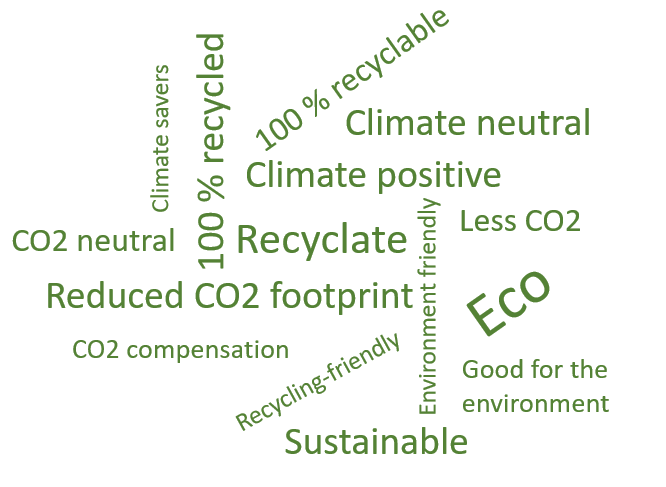
In the jungle of terms – different product labels from a wide range of industries use a variety of designations. An invention or credible information? This question poses challenges for many purchases. © Tana-Chemie

The deliberate use of terms that can be misunderstood or are even an intentional fraud in order to present a product as sustainable is known as greenwashing. Examples of this include the use of terms such as ‘100% recyclable’ on packaging that has almost always been 100% recyclable, such as ice cream packaging, shampoo bottles, drinks bottles etc. made from mono-material. Packaging that has always been made from a single type of material and is recyclable has been emphasized since the increased public interest in sustainability without any real achievement. How often the consumer confuses logos regarding recyclability with actually recycled packaging remains a matter of conjecture.

Statements regarding the CO2 footprint are even more complex to evaluate. Many companies buy themselves a supposed ‘climate neutrality’. The problems range from dubious certificates to deliberately under-calculated CO2 emissions in order to minimize costs. This is made possible by the lack of a standardized basis for calculation and a lack of legal foundations. An additional problem is that companies do not need any longer to reduce their own CO2 emissions and prevents innovation in the area of sustainability.

Recycling, recyclable: These terms describe that the material can be recycled, i.e. processed again. It does not say whether recycled material has already been used. A clear distinction must be made here between recyclable and recycled material. How well the material can be recycled, whether equivalent recycling, so-called upcycling, is possible, only part of it can be reused or even only inferior downcycling is possible, should be questioned. For example, colored plastic can often only be recycled into inferior products or is thermally recycled, similar to composite materials that can no longer be separated. Thermal recycling simply describes the burning of the raw material and therefore cannot be seen as true recycling.

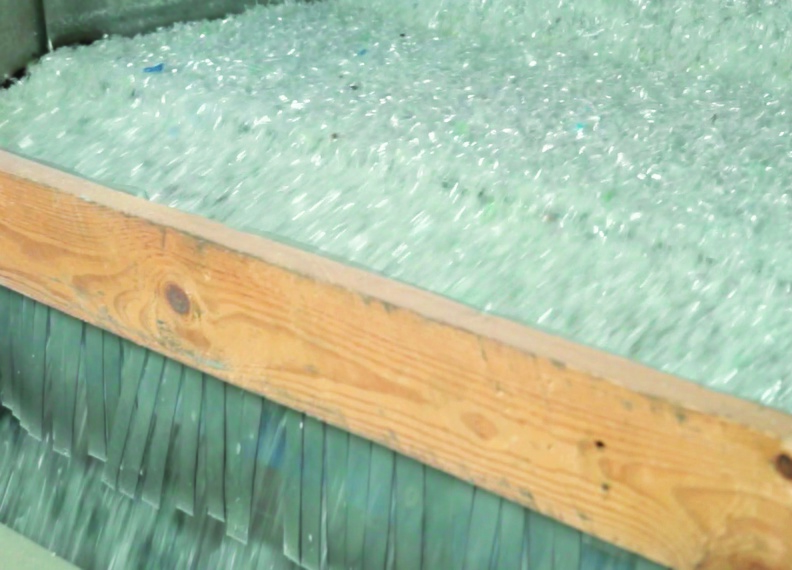
The fine sorting of used plastic in a recycling collection to obtain new high-quality recyclate. © Tana-Chemie

Recyclate, recycled: Recyclate is a material made from previously used plastic that is reused to produce new packaging. This packaging is then recycled. Sounds good, but there are pitfalls here too. Plastic residues generated during production have always been reused because they are nothing more than a resource. This so-called post-industrial recyclate (PIR) has never been in circulation as a product, but since the increased importance of sustainability, it has often been advertised as recycled plastic. Only genuine post-consumer recyclate (PCR) is used plastic from European household collection, such as the yellow bag in Germany. This plastic comes from products that have been collected in a household-based, municipal collection system, e.g. the yellow bag, separated in sorting plants and then reprocessed into high-quality recyclate. Old packaging can then be used to create new packaging. But even if it is PCR, the proportion can still be glossed over. It has been possible for years to use up to 100% recycled material in many product areas, but not in all. Nevertheless, statements such as “packaging with 30% recycled material” are presented as if it were the latest, groundbreaking achievement. In contrast, the brand Green Care Professional, shows that there is another way: They use up to 100 % recycled bottles since 2014. You could think they reached the top, but this is not enough for them, they strive to switch the recyclate from used PET bottles to plastic from the household collections and reached latest 75 % recyclate from this and 25 % are coming from the PET bottle collection. However, the use of recycled material itself is not enough for sustainable packaging, because ideally, even packaging made from old plastic should still be qualitatively recyclable. This means that a monomaterial should be used rather than a composite material. This brings us full circle again – to recyclability.

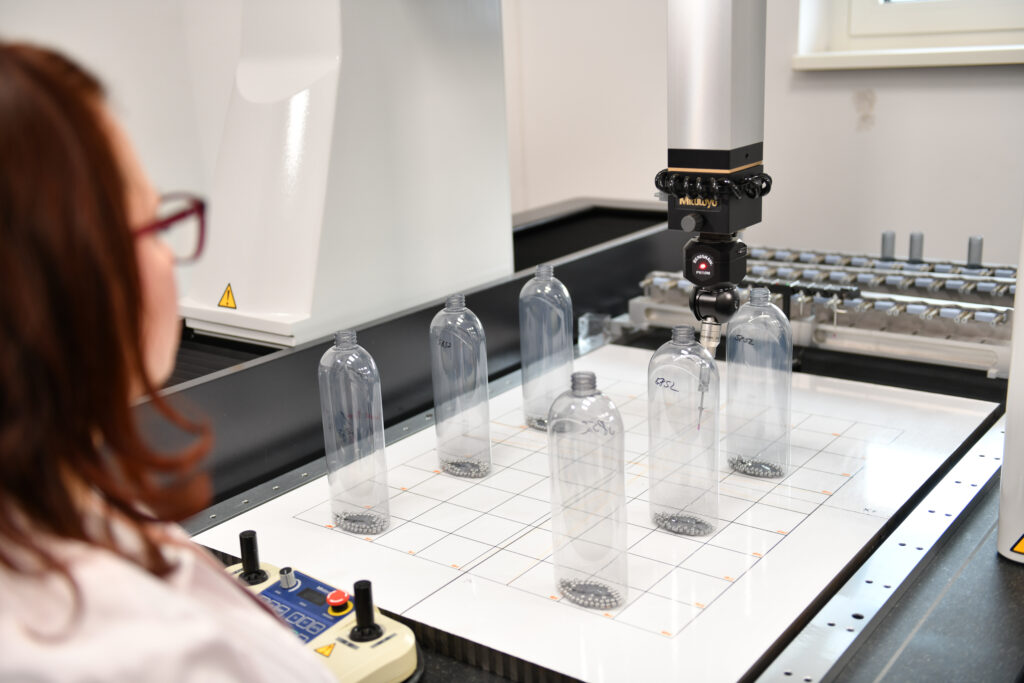
Every detail counts: Tana-Chemie continues to optimize its recycled packaging. ©Tana-Chemie

In principle, a sustainable company first tries to optimize every factor in its own value chain. From the raw materials and energy used to the packaging and where the product ends up, a lot can be done here. This optimization process is never finished because every detail counts. In addition, suppliers and supply chains should be optimized. “A sustainable strategy can only be successful if CO2 avoidance and reduction is constantly practiced. We are proud to offer Green Care Professional products in up to 100% recycled packaging and of course we continue to optimize on all levels,” explains Markus Häfner, Managing Director of Tana-Chemie.

Use your knowledge correctly: Think about the differences in the meanings of the terms and start by distinguishing between recyclable and recycled material. First, differentiate between the statements recyclable and recycled material. The best packaging is one that consists of the highest possible proportion of recyclate and can be recycled again to the highest possible extent. Use common sense to question what you are trying to convey and what the slogan, button or certificate really means. Find out about the company behind it. Truly sustainable companies act transparently and act as long-term partners for their customers and sustainability, like Tana-Chemie with the Green Care Professional brand. The powerful and sustainable, professional cleaning products are consistently designed in the spirit of the circular economy and are therefore safe for people and the environment. Belonging to the Werner & Mertz Group, the group and its Frosch brand enjoy worldwide trust among private and professional users and are pioneers of a functioning circular economy far beyond their own industry.